
Forestry Mulching
Clear overgrown land in a single pass. No burn piles, no dump trucks, no holes left in the ground — the brush gets ground up where it stands and stays there as a mulch mat.
- Insured
- Free Estimates
- No Burning Required
- Local to Cook County
Why people choose mulching over a dozer
A dozer clears land by pushing everything into a pile. That works, but it takes your topsoil with it — the good dirt ends up in the burn pile along with the brush, and what's left behind is subsoil, stump holes and a rain event waiting to wash it into the ditch.
A mulcher doesn't push anything. It grinds standing brush and small trees into chips on the spot. The topsoil stays where it is, the chips stay on top of it, and the mat holds the ground together through the next hard rain.
Practical difference: with a dozer you're often looking at a burn permit, a weather window, a pile that sits for months, and a cleanup bill. With a mulcher you can walk the property the same day we finish.
What it's good for
- Overgrown lots and acreage nobody's touched in years
- Hunting land — shooting lanes, trails, and opening up thick bedding cover without tearing the place apart
- Selective clearing — take the underbrush and junk trees, leave the pines and hardwoods worth keeping
- Pasture and field reclamation where scrub has taken over
- Fence lines, property lines and trails
- Orchard and grove floors — brush control between the rows
- Erosion-sensitive ground where you don't want bare dirt left
What it will and won't handle
Straight answer, because it saves everybody a wasted trip.
Handles well: briars, privet, wax myrtle, gallberry, palmetto, saplings and volunteer growth, and standing trees up to roughly six to eight inches through the trunk depending on species and how dense it is.
Not the right tool for: large mature hardwoods and pines — those come down with a saw first, and we can handle that as land clearing instead. Mulching also doesn't remove stumps; it grinds them flush to the ground. If you're pouring a slab, you want the stumps out, which is a different job.
Ground conditions matter. The track loader spreads its weight and works soft ground better than a wheeled machine, but nothing works in standing water. After a wet stretch we may ask you to wait a week — that's us protecting your property, not stalling.
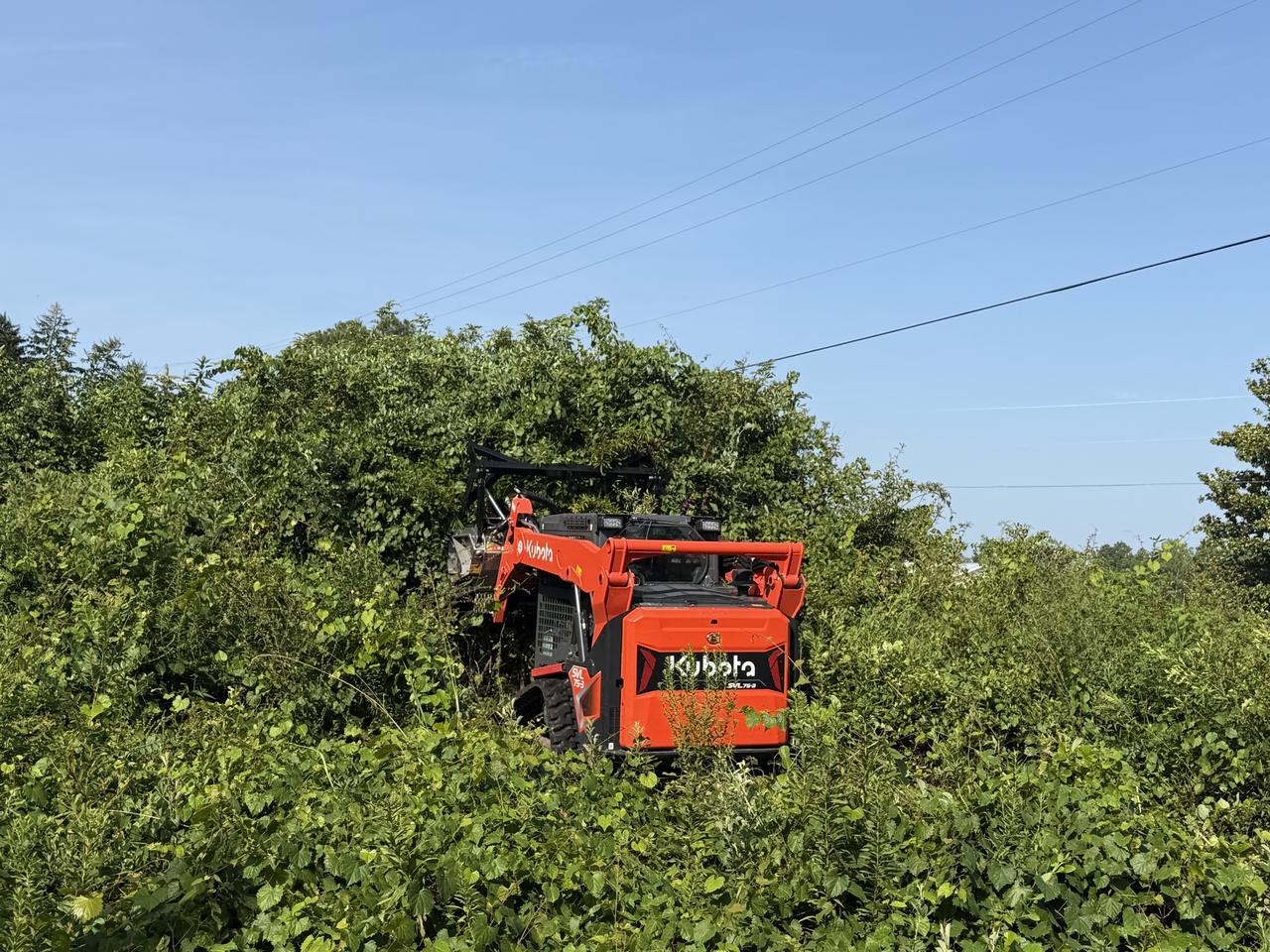
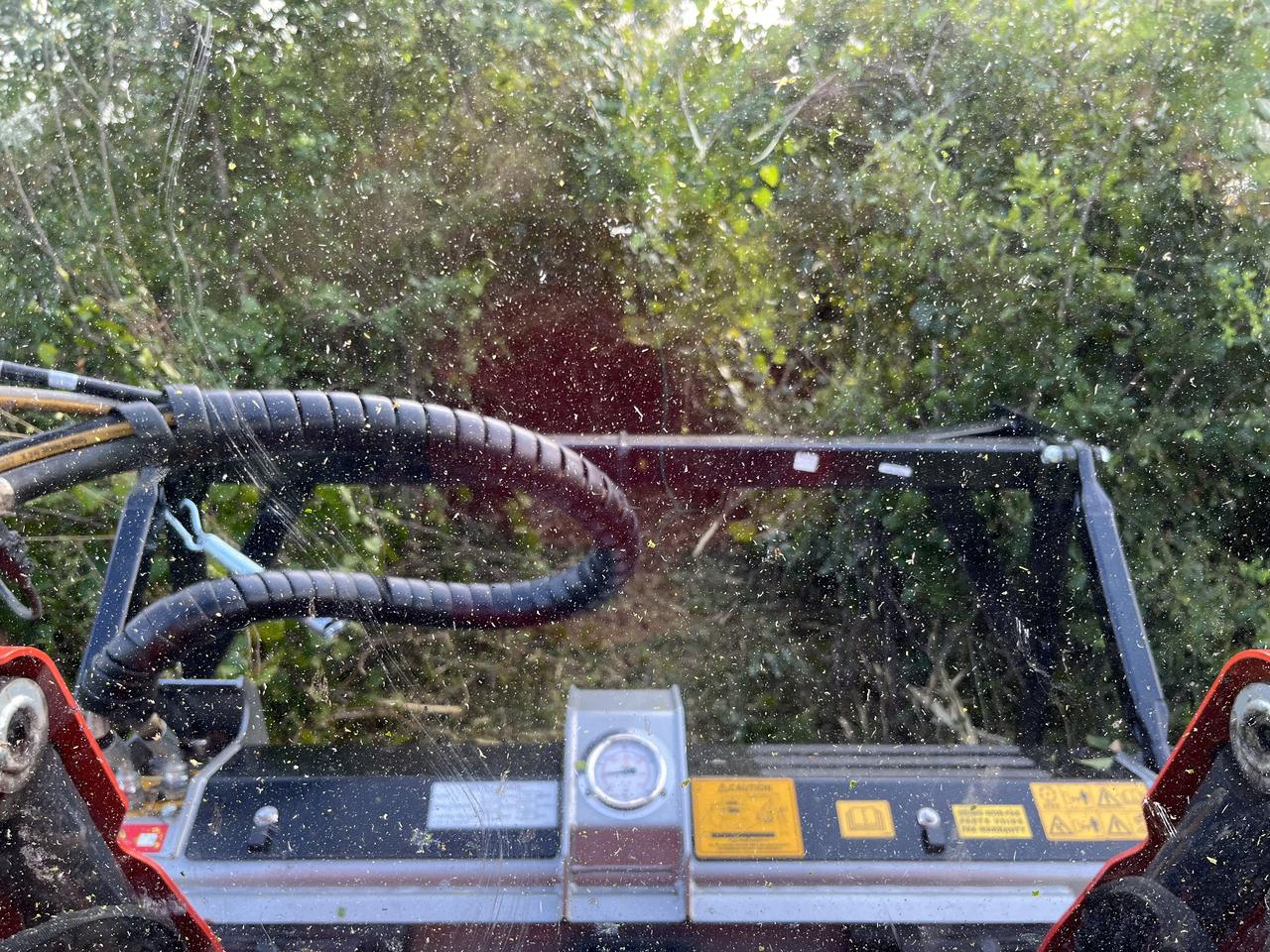
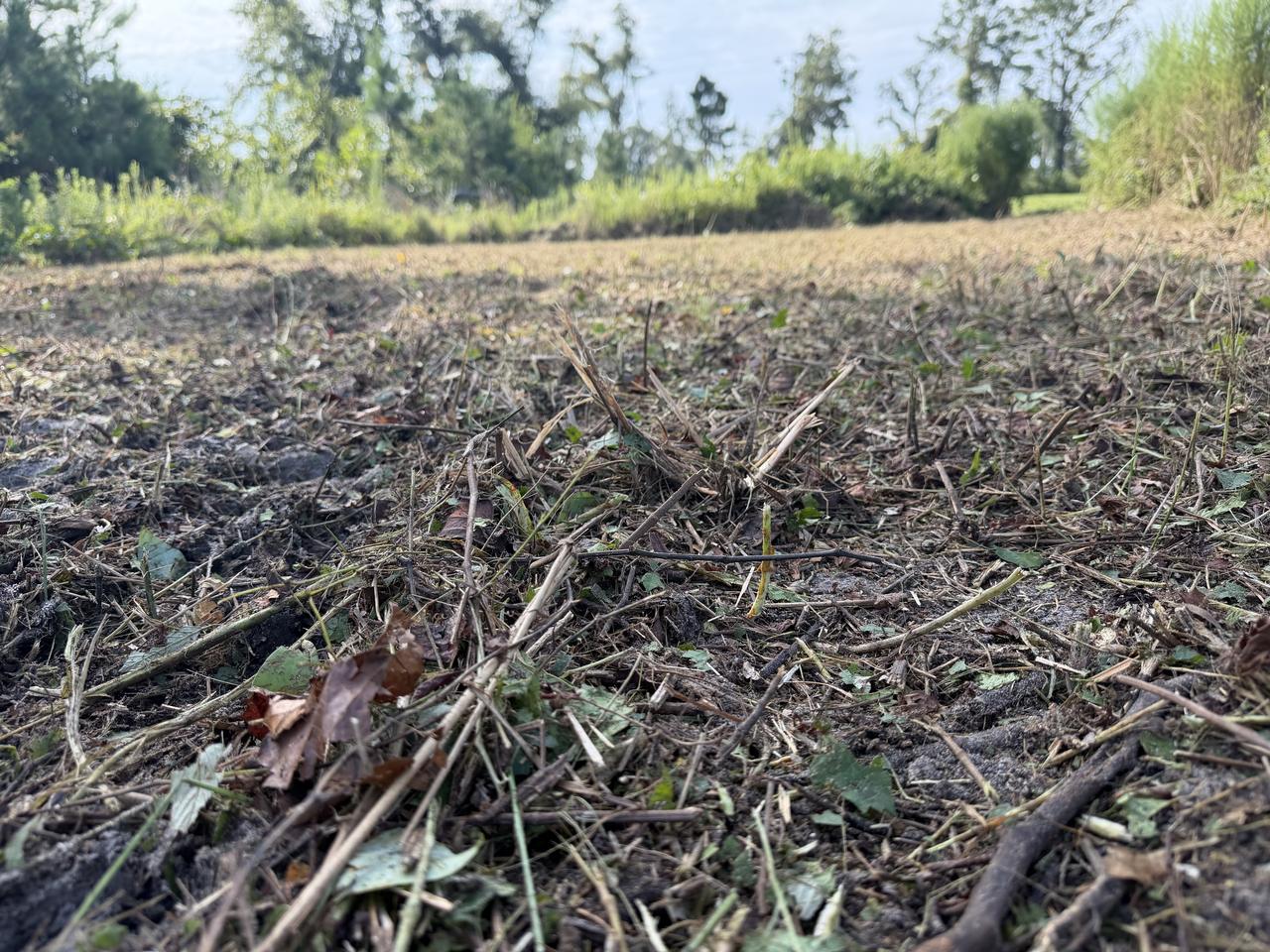
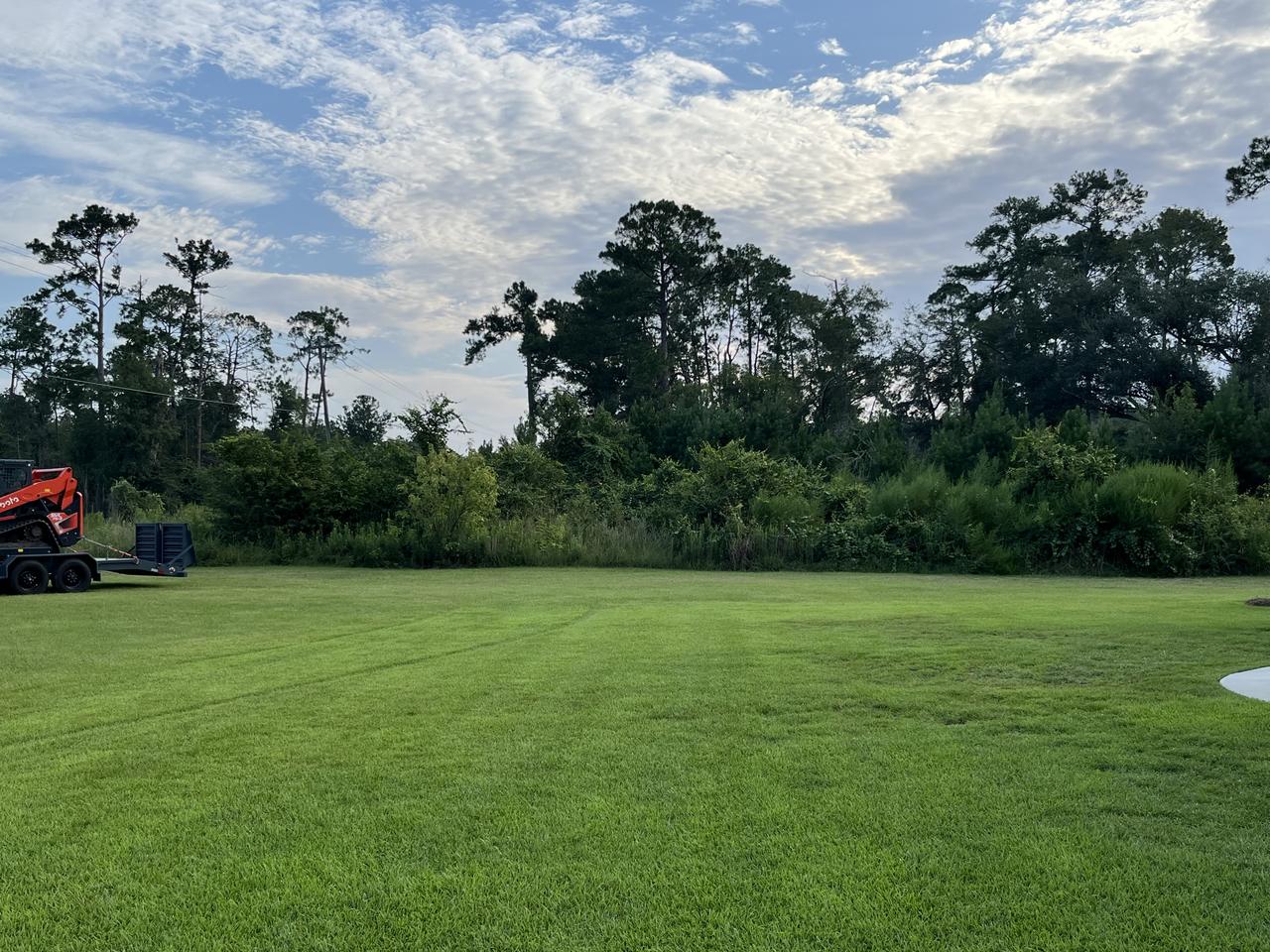
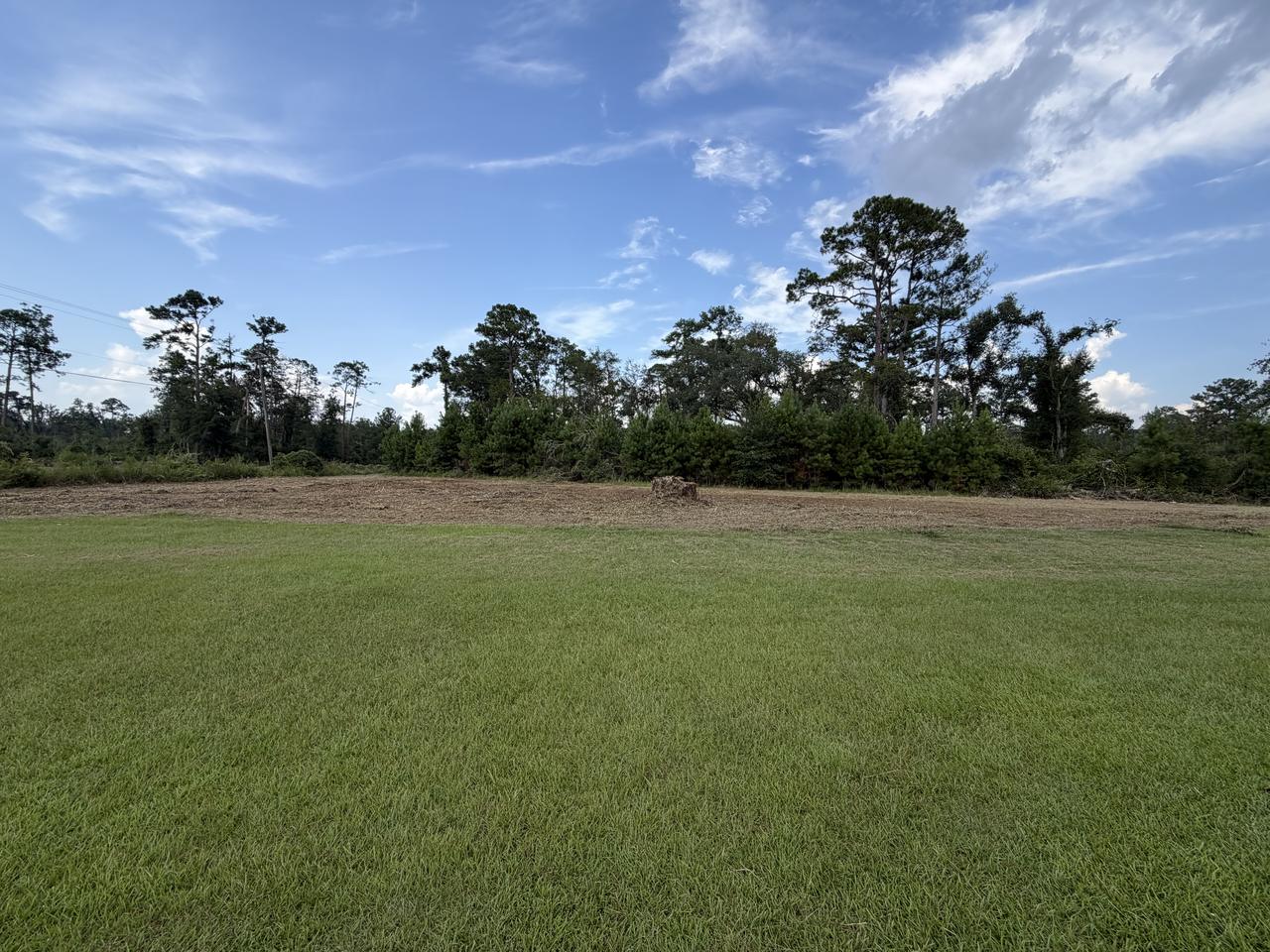
Forestry mulching in Lowndes County, August 2026 — an overgrown treeline cleared and mulched in place in a single day.
The machine
A Kubota SVL 75-3 compact track loader running a forestry mulching head. Roughly 75 horsepower on tracks — enough to grind through thick South Georgia understory, small enough to work between standing timber without knocking down what you're trying to keep.
That size is the point. The big purpose-built mulchers clear faster in open ground but can't do selective work, and they cost more per day. For most jobs around here — a few acres, trees worth saving, a gate to get through — this is the right machine.
What it costs
Mulching is usually priced by the day rather than the acre, because how much ground gets covered depends entirely on how thick it is. Open scrub might be several acres in a day. Heavy growth with saplings throughout might be one.
Fastest way to get a number: text photos of the property to 229-437-4800 with the address and rough acreage. Photos plus satellite is usually enough to quote without a site visit.
Common questions
Do I have to do anything with the mulch afterward?
No. It stays on the ground as a mat, holds soil in place, and breaks down over a season or two. If you're planting pasture or food plots it can be worked in.
Will it kill what's underneath?
A heavy mat suppresses regrowth for a while, which is usually what people want. If you're planting soon after, tell us and we'll run a thinner pass.
Does the brush grow back?
Some will. Mulching cuts at ground level rather than killing roots, so hardy species like privet and wax myrtle send shoots back up. A follow-up pass the next season, or keeping it mowed with a bush hog, holds it. Anyone promising one pass forever isn't being straight with you.
Do I need a burn permit?
No — that's the main reason people choose mulching. Nothing gets piled and nothing gets burned, so there's no permit and no waiting on a weather window.
How much can you do in a day?
Depends entirely on thickness. Light scrub covers ground fast; heavy growth with saplings throughout is slower. We'll give you a realistic estimate from photos rather than a number that sounds good and then runs over.
Related services
-
Land ClearingFull clearing, stumps and site prep
Bush HoggingKeep it down once it's cleared
- Orchard & Land ManagementGrove floor · brush control
- Site Prep & GradingDriveways · pads · grading